About BestBale

Two brothers.
Two skill sets. One real problem.

BestBale began when a costly problem on Jared Herbst’s small square balers led him to call his brother Darren, an engineer, and ask a simple question: could they build something better?

Built by relatable people who care about making a great product and love seeing their customers succeed.

The first field of hay baled with the original BestBale prototype
The first field of hay baled with the original BestBale prototype during the summer of 2023.
Where It Started

The day 55-pound bales became 63-pound bales.

After returning to Salmon, Idaho, Jared purchased several small square balers and a Bale Baron to build a horse-hay business.

Jared would sometimes purchase hay from neighboring farmers by the ton while it was still in the windrow. His crew would bale it, and the finished hay would then be sold by the bale. That meant bale weight had a direct effect on the operation’s margin.

One day, while Jared was operating the bundler in a neighboring field, the baling crew made the purchased hay into approximately 63-pound bales instead of the intended 55 pounds. By the time the weight problem was discovered, the hay had already been baled and the lost margin could not be recovered.

Target Bale Weight
55 lb.
The weight Jared’s crew was trying to produce.
Actual Bale Weight
63 lb.
Extra hay placed into every bale and no longer available to sell separately.

The lesson was clear: bale information is most valuable while the bale is being made—when the operator can still do something about it.

Two Different Skill Sets

Jared brought the problem. Darren helped engineer the solution.

The first BestBale system came from combining firsthand experience behind a baler with the engineering skills needed to turn an idea into something that worked.

01

Jared knew the field problem.

Jared owned the balers, managed the hay operation, and experienced the cost of inconsistent bale weights firsthand. He wanted scales that showed bale weight immediately, along with flake information that could work like a speedometer for the baler.

The goal was to help an operator push the baler hard enough to be productive without pushing it so hard that breakdowns became more likely.

02

Darren knew how to build the electronics.

Darren was working another engineering job at the time. When Jared called and asked whether he could build the system, Darren began researching components, programming modules, and developing the electronics needed to make the idea work.

Together, the brothers began turning Jared’s practical field needs into a working monitoring and control system.

They were not trying to start a company. They were trying to solve a problem on Jared’s own balers.

The First Prototype

Simple, rough around the edges—and good enough to prove the idea.

Development began in May 2023. Darren selected and programmed the electronic modules while Jared ordered components, helped assemble the system, and tested it throughout the hay season.

The original pressure-control prototype used a stepper motor clamped directly to the baler’s manual hydraulic-pressure thumb screw. The motor turned the screw clockwise or counterclockwise to change pressure.

It was not a polished production product, but it worked. It showed that the brothers could bring useful bale information into the cab and electronically adjust the baler from the tractor seat.

“I just want to build three of them for myself.”

Jared’s original plan
Jared and Darren working together while developing the original BestBale prototype
Jared and Darren working together in the tractor while building and testing the first BestBale prototype in 2023.
Original Facebook video showing the first BestBale prototype
Original Facebook Video

The post that revealed a much larger need

The video was intended to show the basic system Jared and Darren had built for Jared’s balers. The response made it clear that other producers wanted the same information and control.

Watch the original video →
A Bigger Problem Than Expected

A simple Facebook video changed the direction.

Jared recorded a video of the bare-bones prototype and posted it online. Comments and messages began coming in from people asking where they could buy one and whether Jared and Darren planned to sell them.

By the end of the 2023 hay season, they knew they had developed something other producers wanted. They also knew the prototype still needed significant refinement before it should be sent to other farms.

Jared and Darren spent the winter of 2023 and early 2024 improving the hardware, screen layouts, scale performance, wiring, installation process, and overall reliability so the system could be tested somewhere besides Jared’s own operation.

Orders were taken for approximately 15 systems, and those first customer kits were shipped in June 2024.
Developed Through a Full Hay Season

Each version taught them what operators really needed to see.

From May through the end of September 2023, Jared and Darren operated the prototype, evaluated the information on the screen, and refined both the display and the scale system.

The first BestBale prototype screen layout
Screen Version 1

The first basic screen

The first layout was built to prove that the system could gather useful baler information and display it inside the tractor cab.

Second BestBale screen showing bale weights and flake counts
Screen Version 2

Weight and flake history

The second layout gave the operator a clearer look at individual bale weights and flake counts so recent bales could be compared from the tractor seat.

Third BestBale screen with a live bale-weight graph
Screen Version 3

A live scale graph

The third layout added more refined graphics and a live weight graph. It looked impressive, but the graph occupied valuable screen space and ultimately was not necessary.

!

The best improvement was not another graphic.

Once Jared and Darren discovered that a shock absorber could help stabilize the scale, they could obtain a much more dependable finished bale weight after the bale dropped from the scale. That reduced the value of showing a large live-weight graph and allowed the screen space to be used more effectively.

A Major Scale Breakthrough

Weighing a bale accurately on a machine moving through a rough field was harder than it looked.

A baler does not operate on a smooth, stationary surface. It moves through uneven fields while the plunger, pickup, tractor, chute, and falling bales continually create movement and vibration.

Early testing showed that simply mounting load cells beneath a chute was not enough. Field bounce could make the readings move substantially and make it difficult to consistently determine the true finished bale weight.

1

Jared and Darren experimented with ways to isolate the scale from the movement and bounce created by the baler and field.

2

Adding a shock absorber made a tremendous difference by controlling chute movement and allowing the scale reading to settle more effectively.

3

The more dependable final weight allowed BestBale to focus the screen on information operators could use instead of filling the display with a constantly moving live graph.

Patent applications filed: BestBale filed patent applications covering elements of the shock-absorbed scale design. Those applications remain pending.
BestBale shock absorber installed on a Massey Ferguson 1840 scale chute

The shock absorber helps control scale-chute movement as the baler travels through the field, allowing the finished bale-weight reading to settle more consistently.

From an Idea to a Product

The first system was developed, tested, refined, and prepared for customers over more than a year.

BestBale was not created overnight. The brothers used a complete hay season to prove the concept, then continued working through the winter to make it dependable and practical for other operators.

01
May 2023

Development begins

Jared brings the field problem to Darren, and the brothers begin ordering components and assembling the first prototype.

02
Summer 2023

A full season of field testing

The prototype operates on Jared’s balers while the brothers improve the display, pressure control, flake counting, and scale.

03
September 2023

The first development season ends

By the end of the season, public interest had confirmed that the problem extended far beyond Jared’s own operation.

04
Winter 2023–2024

Prototype becomes a product

Hardware, wiring, software, scales, installation, and reliability are refined for use on other customers’ farms.

05
June 2024

The first customer kits ship

Approximately 15 ordered systems are shipped to customers for their first season of real-world use outside Jared’s operation.

How BestBale Grew

One useful solution led to the next.

BestBale did not begin with a large product roadmap. It grew by listening to operators, recognizing practical problems, and developing products to address them.

01

Pro 710 Series

The original sellable BestBale system brought monitoring, scales, pressure control, and automation capability to single small square balers.

02

Lite 430 Series

Some operators wanted useful in-cab monitoring without scales, hydraulic control, or the cost of a complete Pro system. That need led to the Lite Series.

03

Double-baler systems

Requests from customers with double balers led to the Pro 1000 and Pro 1200 Series and increasingly complex monitoring and control systems.

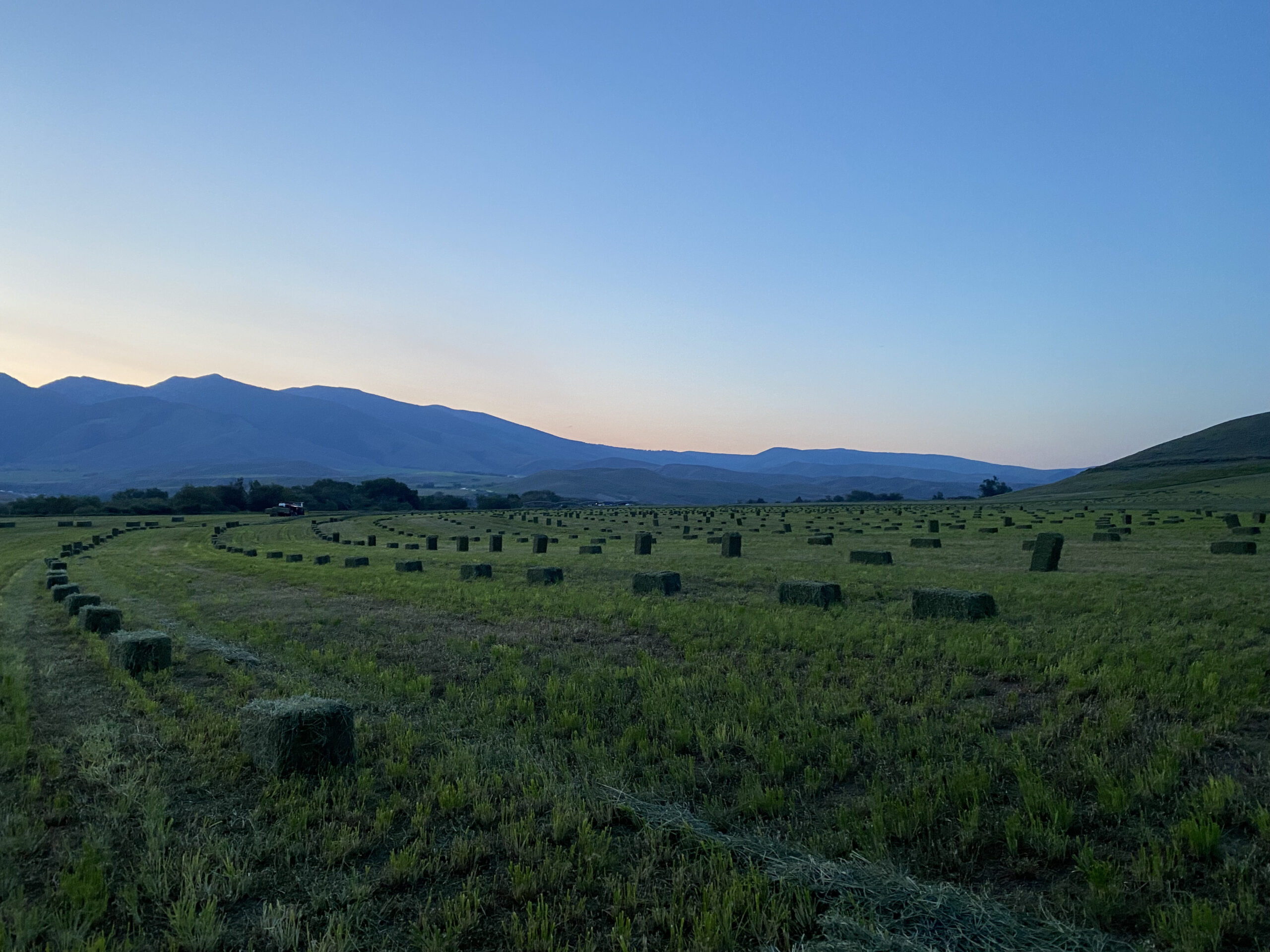
Small square bales produced during BestBale field development
Built Around Real Baling

Some of the best ideas begin with a customer asking a question.

BestBale products continue to develop through conversations with the people who operate balers every day. When customers identify a problem or ask whether something can be done differently, Jared and Darren are willing to study it, build it, test it, and keep refining it.

A

AutoSTEAM

A customer suggestion led the brothers to purchase and run a steamer in Salmon while Darren developed automatic steam control for small square balers.

D

Double-baler development

Access to real double balers allowed BestBale to install, operate, test, and improve systems under actual field conditions.

B

Bale Butler

The Bale Butler required four main prototype versions before Jared and Darren reached a dependable design ready for production.

The People Behind BestBale

Two brothers who are still close to the product and the customer.

Jared and Darren bring different strengths to BestBale, but share the same goal: build products that work well and support the people who rely on them.

Jared Herbst, Co-Founder of BestBale
Co-Founder & Business Director

Jared Herbst

Jared brings practical farming experience, mechanical product development, customer insight, and business operations to BestBale.

Darren Herbst, Co-Founder of BestBale
Co-Founder & Engineering Director

Darren Herbst

Darren brings engineering, electronics, programming, software, and control-system development to BestBale.

We started by solving a problem on our own balers. Let us help you solve the problems on yours.

We want to make great products, be easy to work with, and help every customer get more information, control, consistency, and value from their baling operation.