

Turn two rows of small square bales into one smooth feed path.
The Bale Butler is a simple, all-mechanical singulation system designed to work behind a Massey Ferguson 1436 double baler and in front of any pickup model Bale Baron. It allows two adjacent rows of bales to be fed into one organized stream so you can bale and bundle in one pass.
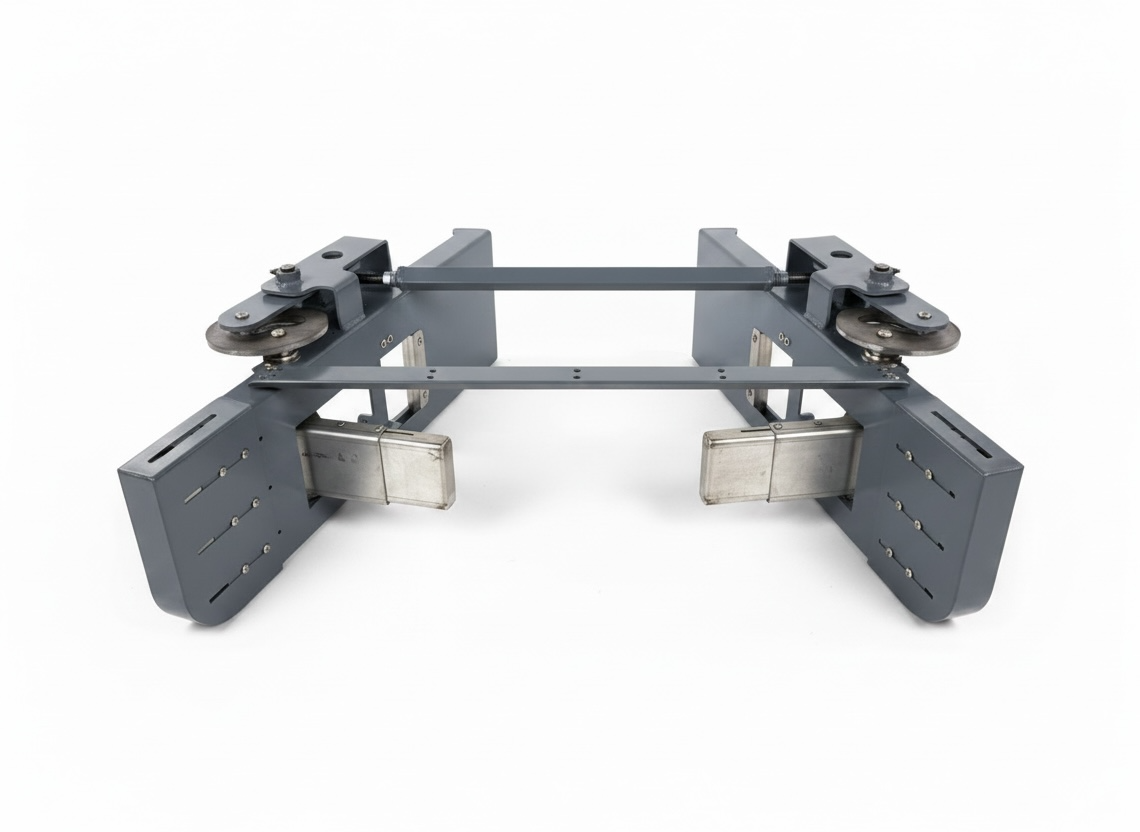
Two rows come in. One row feeds the Bale Baron.
The goal is simple: merge two adjacent bale rows before they reach the Bale Baron pickup.


Double balers can make a lot of hay fast. The challenge is feeding it into a bundler cleanly.
A Massey Ferguson 1436 double baler can produce two rows of small square bales. The problem is that a pickup model Bale Baron is designed to pick up one organized row at a time. Without singulation, two bales can arrive together, fight for the same opening, or create inconsistent feeding.
The field challenge
Two rows of bales behind the double baler need to be singulated ahead of the Bale Baron's pickup. The Bale Butler does just that! Our patent-pending design only allows one bale to pass through the Bale Butler at a time, creating a perfectly orchestrated pickup for the Bale Baron every time.
Bales can be dropped side-by-side or staggered and they will flow smoothly through the Bale Butler. The Bale Butler has two gates, one for each row, but only one gate can open at a time. When one gate is open, it mechanically locks the other gate closed, which pushes that bale on the ground until the first bale clears the gate. After it clears the gate, the gate swings closed and allows the opposite gate to open, which lets the bale flow into the Bale Baron's pickup.
Timing matters
If two bales try to enter at the same time, the system needs a way to hold one bale back while letting the other bale pass through.
One-pass bundling needs control
To bale and bundle in one pass, the rows need to be managed before the Bale Baron sees them. That is where the Bale Butler fits.
Simple mechanical answer
The Bale Butler solves the problem with a gate system operators can understand, inspect, and trust in real field conditions.
Side-by-side rows, ready for the Bale Butler.
This shows how the bales sit after coming out of the double baler with the BestBale flat drop chute.

The Bale Butler is a mechanical singulator for double baler setups.
Instead of relying on electronics, sensors, hydraulics, or complicated timing systems, the Bale Butler uses a simple mechanical gate design to control bale flow. It sits in front of the Bale Baron and manages two incoming bale rows, allowing only one bale to feed through at a time.
A cleaner alternative to spreading bale rows far apart.
The AGCO "whale tail" separates the two rows of bales with several feet of space in between them. This requires the bundler to make two separate passes to bundle what the Bale Butler can singulate in one pass.
Two incoming rows. One controlled outgoing row.
The Bale Butler works directly in front of the Bale Baron pickup. As bales arrive from two adjacent rows, the cam-style gate system controls which bale is allowed to pass.
The flat drop chute creates two rows
The BestBale flat drop chute positions the bales side by side behind the double baler so the Bale Butler has two adjacent rows to manage.
The Bale Butler receives the rows
The Bale Butler mounts in front of the Bale Baron and lines up with the two incoming bale paths.
The gates control bale flow
If two bales arrive together, one gate locks while the other gate allows one bale to pass through.
The Bale Baron makes one pass
After the first bale passes, the gate returns home and the second bale is released into the single feed path.
The Bale Butler helps unlock the value of a double baler and a Bale Baron working together.
For many hay operations, the real opportunity is not just making bales faster. It is making bales faster while still getting them bundled efficiently in the same pass.
Save time in the field
Baling and bundling in one pass can reduce extra handling, extra passes, and the time spent reorganizing bales after they hit the ground.
Feed the Bale Baron properly
The Bale Baron needs a clean, single feed path. The Bale Butler helps create that feed path from two adjacent incoming rows.
Keep it mechanical
With no complicated electronics or hydraulic sequencing, the Bale Butler is designed to be simple, understandable, and dependable.
Without Bale Butler
- Two rows may not feed cleanly into one pickup path.
- Bales can arrive at the same time and compete for the opening.
- Operators may need extra passes, extra spacing, or extra handling.
- Double baler productivity can be limited by bundler feeding challenges.
With Bale Butler
- Two adjacent rows are controlled before they reach the Bale Baron.
- The patent-pending cam-style gates let only one bale feed through at a time.
- The system resets mechanically after each bale passes.
- Baling and bundling in one pass becomes more practical and organized.
Because the bottleneck should not be between the baler and the bundler.
If your double baler can make hay faster than your system can organize it, the Bale Butler helps close the gap.
More productivity
Make better use of your double baler by helping the Bale Baron receive a single, organized stream of bales.
Less complexity
A mechanical singulation system keeps the concept simple and avoids unnecessary layers of controls or automation.
Better workflow
Adjacent rows, controlled feeding, and one-pass bundling can make the entire field operation smoother.
Bale Butler FAQ
A few simple answers about what the Bale Butler does and where it fits.
What does the Bale Butler do?
The Bale Butler singulates two adjacent rows of small square bales into one row before the bales enter a bundler.
Where does it mount?
The Bale Butler mounts in front of the Bale Baron, where it can manage the two incoming bale rows before they reach the pickup.
Does it use electronics?
No. The Bale Butler uses a simple mechanical cam-style gate system. When two bales try to feed at the same time, one gate holds while the other gate allows a bale through.
Do the bale rows need to be perfectly even?
The Bale Butler is designed for adjacent rows that may be side by side or slightly staggered. The goal is to manage the natural timing difference between the two rows and turn them into one controlled feed path.
What problem does it solve?
It solves the problem of feeding two rows of bales into a bundler with one pass. This makes it possible to bale and bundle all in one pass without making extra unnecessary passes around the field.
Will it work with every setup?
The Bale Butler is designed around Massey Ferguson 1436 double baler setups feeding pickup model Bale Baron bundlers. The BestBale flat drop chute is required to create the adjacent two-row bale pattern. Because field setups can vary, we recommend contacting us to confirm fit and application before ordering.
Make double baling and pickup bundling work together.
The Bale Butler gives operators a simple mechanical way to turn two bale rows into one controlled feed path. Contact us to talk through your baler, Bale Baron model, field layout, flat drop chute, and whether the Bale Butler is the right fit for your operation.
Contact Us